Archetypal mentor
Friedrich Nietzsche
Friedrich Nietzsche's birth chart: born 15 October 1844 in Röcken, Germany. Its defining patterns are Sun–Pluto, Mercury–Uranus and Mars–Uranus.
Inspired by the life of Friedrich Nietzsche
Psyborg's read
Nietzsche broke every frame he was given. He did it not to leave ruins, but to force what came next to be alive. He wrote in aphorisms, short sharp sayings, because the lightning wouldn't slow down. He staked his identity on the encounter with power that no polite selfhood could contain. Nietzsche offers the mentorship of that thinker. If you need an archetypal mentor who will not let you hide inside a borrowed vocabulary, he is already waiting.
Life in brief
- 1864
Begins studying theology and classical philology at the University of Bonn, in the hope of becoming a minister.
- 1869
At 24, is appointed Professor of Classical Philology at the University of Basel in Switzerland, with Ritschl's support.
- 1872
Publishes his first book, The Birth of Tragedy. Its main theme is that two artistic impulses, the Dionysian and the Apollonian, join to form tragedy.
Mercury and Uranus - 1879
Resigns his professorship at Basel and is given a pension.
Sun and Pluto - 1883
Goes to Rapallo, where he writes the first part of Thus Spoke Zarathustra. He works on the book between 1883 and 1885.
- 1886
Prints Beyond Good and Evil at his own expense.
- 1887
Writes On the Genealogy of Morality, a polemic.
Mars and Uranus - 1900
Dies in Weimar on 25 August, aged 55.
Dates from Wikipedia and Wikidata.
Three patterns in Nietzsche's birth chart
Sun–Pluto
Nietzsche staked everything on becoming himself — and the price was total. The young Basel professor who resigned at thirty-four was not retreating from the world but stripping his identity down to what could withstand contact with elemental power.
For this pattern
- Film
- ChinatownRoman Polanski, 1974
- Practice
- Method Acting
Others who share it
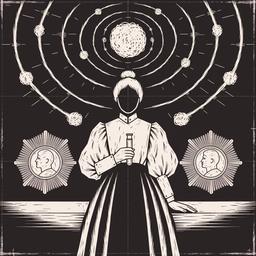
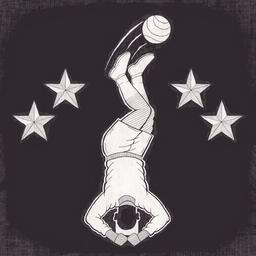
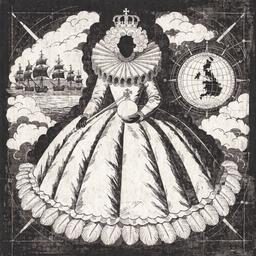
Mercury–Uranus
Nietzsche did not argue — he short-circuited every expectation. From The Birth of Tragedy onward, his thinking operated at a frequency his own discipline could not receive: a classical philologist who used the tools of naming and differentiation to override the framework philology protected.
For this pattern
- Film
- ArrivalDenis Villeneuve, 2016
- Practice
- Improvisational Comedy
Others who share it
Mars–Uranus
Nietzsche did not critique — he attacked. The Genealogy of Morals opens not with a question but with a strike aimed at the underpinnings of Western ethics, and every blow lands from an angle the existing arrangement never accounted for.
For this pattern
- Film
- The MatrixLana and Lilly Wachowski, 1999
- Practice
- Mountain Biking
Others who share it
Questions about Friedrich Nietzsche
When was Friedrich Nietzsche born and when did he die?
Friedrich Nietzsche was born on 15 October 1844 in Röcken, in Prussia. He died in Weimar on 25 August 1900, aged 55.
What patterns stand out in Friedrich Nietzsche's birth chart?
Psyborg reads three patterns in Nietzsche's chart: Sun–Pluto, Mercury–Uranus and Mars–Uranus. This page gives Psyborg's read of each, with a film and a practice for each pattern and the other archetypal mentors who share them.
What was Friedrich Nietzsche's first book?
His first book was The Birth of Tragedy, which he published in 1872.
Who else shares Nietzsche's patterns?
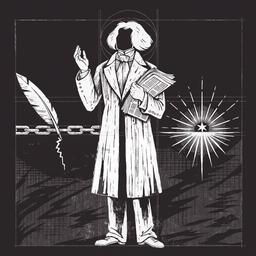
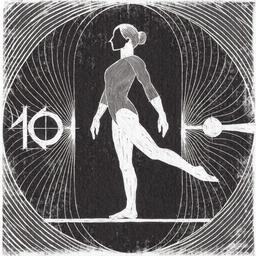
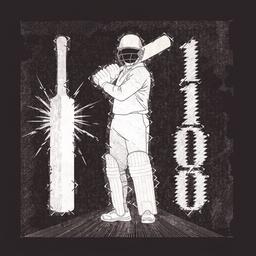
Sun–Pluto: Marie Curie, Pelé and Queen Elizabeth I. Mercury–Uranus: Galileo Galilei, Queen Elizabeth I and Winston Churchill. Mars–Uranus: Coco Chanel, Frederick Douglass and Nadia Comaneci.
More archetypal mentors in philosophy
Which of Nietzsche's patterns live in you?
Psyborg reads your birth chart, shows you the archetypal mentors who share your patterns, and talks with you about what they mean for the work in front of you.
See where your chart meets Nietzsche's14 days free. No card needed.Already a member? Open Psyborg →The archetypal mentors featured here are historical and public figures presented for educational and inspirational purposes. Biographical profiles are editorial interpretations inspired by publicly documented lives, works, and words. Inclusion does not imply endorsement of or affiliation with Numinous Realm or Psyborg.
What's newPrivacyTermsDeveloped by Numinous Realm© 2026 Psyborg