Archetypal mentor
René Descartes
René Descartes' birth chart: born 31 March 1596 in La Haye en Touraine, France. Its defining patterns are Sun–Jupiter, Sun–Uranus and Jupiter–Uranus.
Inspired by the life of René Descartes
Psyborg's read
Descartes refused every framework he had inherited. He built a new one from the ground of his own certainty, and that is the mentorship he offers. He did not reform philosophy. He restarted it. If you have ever needed to clear everything away before you could think clearly, he shows how the clearing itself becomes the foundation.
Life in brief
- 1618
Joins the Dutch States Army at Breda, where he is encouraged to advance his mathematics.
- 1619
After three dreams on the night of 10 to 11 November, concludes that science will be a central part of his life's work.
- 1628
Returns to the Dutch Republic, where he writes all of his major work.
- 1629
Joins the University of Franeker to study under Adriaan Metius.
- 1637
Publishes the Discourse on the Method with three essays: The Meteors, Dioptrics and Geometry.
Jupiter and Uranus - 1641
Publishes the Meditations on First Philosophy in Latin, for a learned audience.
- 1649
Accepts Queen Christina's invitation to her court, where she wants help organizing a new scientific academy. He moves to Sweden in the middle of winter.
- 1650
Dies in Stockholm on 11 February, aged 53.
Dates from Wikipedia and Wikidata.
Three patterns in Descartes's birth chart
Sun–Jupiter
Descartes did not present himself as a specialist. The Discourse on the Method was subtitled "for rightly directing one's reason and seeking truth in the sciences" — all the sciences, the whole of knowledge, addressed by a single authorial identity whose reach was the point.
For this pattern
- Film
- Babette's FeastGabriel Axel, 1987
- Practice
- Public Speaking
Others who share it
Sun–Uranus
"I think, therefore I am" — the cogito — is not merely a philosophical proposition. It is an act of radical self-authoring performed inside an era that demanded deference to Aristotle, to the Church, to every inherited intellectual authority of seventeenth-century Europe.
For this pattern
- Film
- Malcolm XSpike Lee, 1992
- Practice
- Stand-Up Comedy
Others who share it
Jupiter–Uranus
In 1637, a French mathematician living in self-imposed exile in the Dutch Republic published a work in vernacular French rather than scholarly Latin — the Discourse on the Method — and in its appendix fused geometry and algebra into a single coordinate system that had never existed before. This was not incremental progress within an established field; it was the invention of a new field entirely, analytic geometry, a breakthrough whose scope would make calculus possible.
For this pattern
- Film
- Close Encounters of the Third KindSteven Spielberg, 1977
- Practice
- Science Fiction Writing
Others who share it
Questions about René Descartes
When was René Descartes born and when did he die?
René Descartes was born on 31 March 1596 in La Haye en Touraine, France. He died in Stockholm, Sweden, on 11 February 1650, aged 53.
What patterns stand out in René Descartes' birth chart?
Psyborg reads three patterns in Descartes' chart: Sun–Jupiter, Sun–Uranus and Jupiter–Uranus. This page gives Psyborg's read of each, with a film and a practice for each pattern and the other archetypal mentors who share them.
What is René Descartes' most famous quote?
His best-known philosophical statement is "cogito, ergo sum", which means "I think, therefore I am".
Who else shares Descartes' patterns?
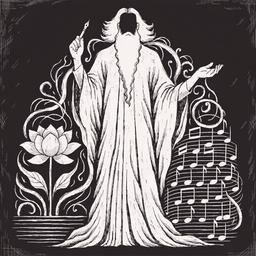
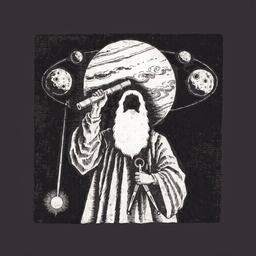
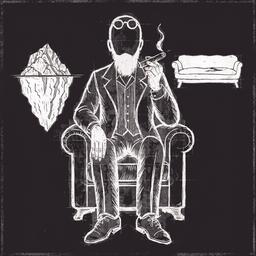
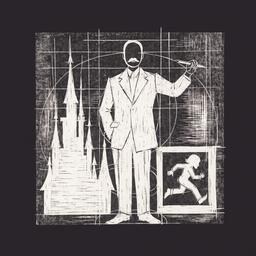
Sun–Jupiter: Rabindranath Tagore. Sun–Uranus: Galileo Galilei, Sigmund Freud and Walt Disney. Jupiter–Uranus: Albert Einstein, Napoleon Bonaparte and Richard Branson.
More archetypal mentors in philosophy
Which of Descartes' patterns live in you?
Psyborg reads your birth chart, shows you the archetypal mentors who share your patterns, and talks with you about what they mean for the work in front of you.
See where your chart meets Descartes'14 days free. No card needed.Already a member? Open Psyborg →The archetypal mentors featured here are historical and public figures presented for educational and inspirational purposes. Biographical profiles are editorial interpretations inspired by publicly documented lives, works, and words. Inclusion does not imply endorsement of or affiliation with Numinous Realm or Psyborg.
What's newPrivacyTermsDeveloped by Numinous Realm© 2026 Psyborg