Archetypal mentor
Galileo Galilei
Galileo Galilei's birth chart: born 15 February 1564 in Pisa, Italy. Its defining patterns are Sun–Uranus, Sun–Neptune and Mercury–Uranus.
Inspired by the life of Galileo Galilei
Psyborg's read
Galileo pointed a lens at the sky. He let what he saw remake the world's story, including his own. He offers the mentorship of someone who did exactly that. He is the archetypal mentor for anyone whose clearest perception puts them at odds with the room they're standing in, and who refuses to unsee what the instrument revealed.
Life in brief
- 1592
Moves to the University of Padua, where he teaches geometry, mechanics and astronomy until 1610.
- 1609
Shows an early telescope to Venetian lawmakers on 25 August, then aims it at the Moon on 30 November.
- 1610
Sees four moons circling Jupiter in January and publishes the Starry Messenger in March.
Sun and Neptune - 1613
Publishes Letters on Sunspots, which suggests that the Sun and the heavens can change.
- 1623
Publishes The Assayer, which argues against theories that rest on Aristotle's authority and for experiment.
- 1632
Publishes the Dialogue Concerning the Two Chief World Systems, which sets the Copernican view of the sky against the older Aristotelian one.
Sun and Uranus - 1638
Publishes Two New Sciences in Holland.
- 1642
Dies at Arcetri on 8 January, aged 77, still receiving visitors until the end.
Dates from Wikipedia and Wikidata.
Three patterns in Galileo's birth chart
Sun–Uranus
In 1632, Galileo published the Dialogue Concerning the Two Chief World Systems and placed the arguments of established Aristotelian cosmology in the mouth of a character named Simplicio — a move so structurally audacious that it dissolved the patronage that had protected him for decades. This was not a miscalculation.
For this pattern
- Film
- Malcolm XSpike Lee, 1992
- Practice
- Stand-Up Comedy
Others who share it
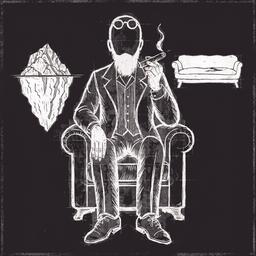
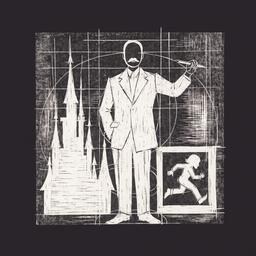
Sun–Neptune
Galileo turned a spyglass toward Jupiter in January 1610 and saw four small points of light shifting position night after night — moons orbiting another world. Within weeks he published Sidereus Nuncius, and his identity became inseparable from what the telescope disclosed: not the mathematics professor at Padua but the man through whom a hidden cosmos announced itself.
For this pattern
- Film
- Mulholland DriveDavid Lynch, 2001
- Practice
- Filmmaking
Others who share it
Mercury–Uranus
Galileo did not merely observe the moons of Jupiter — he invented the notation to track them, sketching their nightly positions in sequences that turned raw telescopic surprise into communicable data. This is the Mercury–Uranus signature at its most precise: the flash of unprecedented perception yoked immediately to a new system of transmission.
For this pattern
- Film
- ArrivalDenis Villeneuve, 2016
- Practice
- Improvisational Comedy
Others who share it
Questions about Galileo Galilei
What year was Galileo Galilei born and died?
Galileo was born on 15 February 1564 and died on 8 January 1642, at the age of 77.
What patterns stand out in Galileo Galilei's birth chart?
Psyborg reads three patterns in Galileo's chart: Sun–Uranus, Sun–Neptune and Mercury–Uranus. This page gives Psyborg's read of each, with a film and a practice for each pattern and the other archetypal mentors who share them.
What did Einstein call Galileo?
Albert Einstein called Galileo the father of modern science. He also called him the "father of modern physics".
Who else shares Galileo's patterns?
Sun–Uranus: Sigmund Freud, Walt Disney and Jack Ma. Sun–Neptune: Barack Obama, Coco Chanel and Frida Kahlo. Mercury–Uranus: Queen Elizabeth I, Winston Churchill and Alfred Hitchcock.
More archetypal mentors in science
Which of Galileo's patterns live in you?
Psyborg reads your birth chart, shows you the archetypal mentors who share your patterns, and talks with you about what they mean for the work in front of you.
See where your chart meets Galileo's14 days free. No card needed.Already a member? Open Psyborg →The archetypal mentors featured here are historical and public figures presented for educational and inspirational purposes. Biographical profiles are editorial interpretations inspired by publicly documented lives, works, and words. Inclusion does not imply endorsement of or affiliation with Numinous Realm or Psyborg.
What's newPrivacyTermsDeveloped by Numinous Realm© 2026 Psyborg