Pattern
Mercury and UranusMercury–Uranus
- Mercury
- The principle of communication, perception, and the movement of meaning
- Uranus
- The principle of change, rebellion, freedom, liberation, reform and revolution, and the unexpected breakup of structures
In the library
Ten archetypal mentors carry Mercury–Uranus
Each line opens Psyborg's read of that mentor's Mercury–Uranus.
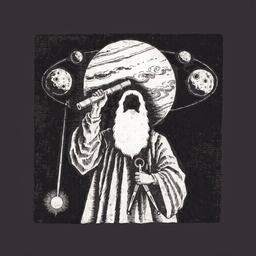 Galileo GalileiScienceGalileo did not merely observe the moons of Jupiter — he invented the notation to track them, sketching their nightly positions in sequences that turned raw telescopic surprise into communicable data.
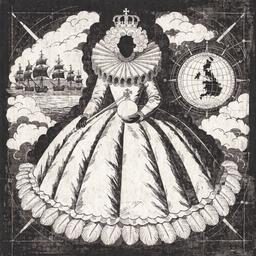 Queen Elizabeth IPoliticsElizabeth spoke six languages and used every one of them as an instrument. Her parliamentary addresses — particularly the Golden Speech of 1601, delivered to a restive Commons near the end of her reign — did not persuade through argument alone but through a quality of rhetorical reconfiguration that left her audience seeing their own position differently before they understood what had shifted.
 Winston ChurchillPoliticsChurchill's mind did not move through the expected channels. As a young war correspondent in South Africa and India, he was already wiring dispatches that bypassed the frame — not merely reporting what happened but rearranging the reader's sense of what the event meant, leaping from battlefield detail to imperial consequence in a single sentence.
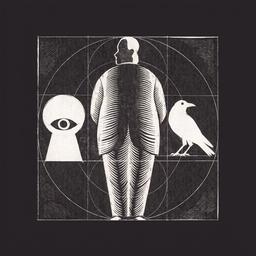 Alfred HitchcockFilmBefore Hitchcock, cinema told you what to think by showing you what happened. After Hitchcock, cinema told you what to think by showing you what someone else was watching happen.
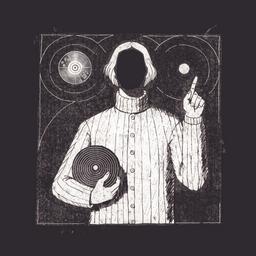 Carl SaganScience"Extraordinary claims require extraordinary evidence" — the sentence itself is a Mercury–Uranus artifact: a new rule of thought compressed into a single phrase that reorganized how an entire culture evaluated its own credulity.
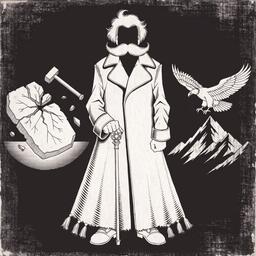 Friedrich NietzschePhilosophyNietzsche did not argue — he short-circuited every expectation. From The Birth of Tragedy onward, his thinking operated at a frequency his own discipline could not receive: a classical philologist who used the tools of naming and differentiation to override the framework philology protected.
 Gabriel García MárquezLiteratureBefore One Hundred Years of Solitude existed as a novel, it existed as a problem of articulation — how to say what the Caribbean coast already knew, that the miraculous and the mundane lived in the same sentence.
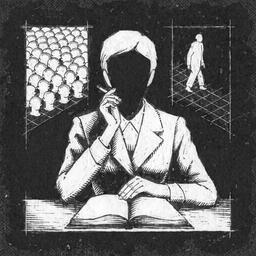 Hannah ArendtPhilosophyArendt did not write within political philosophy so much as rewire it. Before The Human Condition, the Western tradition had largely collapsed the political into the social, the public into the economic — and Arendt, in a single stroke, pulled the categories apart and reassembled them in a configuration no one had offered before.
 Srinivasa RamanujanScienceWhat made Ramanujan's mind legible — barely — was not his answers but his connections.
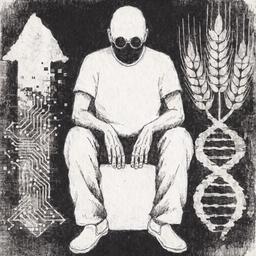 Yuval Noah HarariPhilosophyA medievalist walks into a world history survey at the Hebrew University of Jerusalem and, instead of teaching the textbook, delivers a set of lectures that become Sapiens — a book that reroutes how an entire popular audience understands the species.
Films
- ArrivalDenis Villeneuve, 2016
- MementoChristopher Nolan, 2000
- Everything Everywhere All at OnceDaniel Kwan, Daniel Scheinert, 2022
- NetworkSidney Lumet, 1976
Practices
- Improvisational Comedy
- Electronics Prototyping
Is Mercury–Uranus in your chart?
Psyborg reads your birth chart and shows you which patterns are yours, with the archetypal mentors, films and practices that share them.
Start your free trial14 days free. No card needed.Already a member? Open Psyborg →The archetypal mentors featured here are historical and public figures presented for educational and inspirational purposes. Biographical profiles are editorial interpretations inspired by publicly documented lives, works, and words. Inclusion does not imply endorsement of or affiliation with Numinous Realm or Psyborg.
What's newPrivacyTermsDeveloped by Numinous Realm© 2026 Psyborg