Archetypal mentor
Pablo Picasso
Pablo Picasso's birth chart: born 25 October 1881 in Málaga, Spain. Its defining patterns are Mercury–Jupiter, Mercury–Pluto and Jupiter–Pluto.
Inspired by the life of Pablo Picasso
Psyborg's read
Picasso does not offer you a style. He offers you the nerve to destroy the style you just mastered and begin again: harder, stranger, closer to what you actually see. If your mind moves faster than any single form can hold it, he is the archetypal mentor who says: then break the form. The canvas will survive. Will you?
Life in brief
- c. 1895
At thirteen he is admitted to the advanced class at Barcelona's School of Fine Arts. The entrance exam often takes students a month, and he finishes it in a week.
- 1900
Makes his first trip to Paris, then the art capital of Europe.
- 1901
Begins his Blue Period, with sombre paintings in shades of blue and blue-green.
Mercury and Jupiter - 1904
Moves into his Rose Period, with a lighter tone, orange and pink colours, and circus people, acrobats and harlequins.
- 1907
Paints Les Demoiselles d'Avignon, the painting that begins his African-influenced period.
Jupiter and Pluto - 1909
Develops Analytic Cubism with Georges Braque, working in brownish and neutral colours.
- 1937
Shows Guernica, his painting of the bombing of the town of Guernica, in July at the Spanish Pavilion of the Paris International Exposition.
Mercury and Pluto - 1973
Dies at Mougins, France, aged 91.
Dates from Wikipedia and Wikidata.
Three patterns in Picasso's birth chart
Mercury–Jupiter
Picasso's eye moved faster than any single period could contain it. Blue Period, Rose Period, Cubism, Neoclassicism, Surrealism — each name marks not a style but a perceptual leap, a mind that connected what it saw in African sculpture to what Cézanne left unfinished to what the eye actually does when it encounters a face from multiple angles at once.
For this pattern
- Film
- Dead Poets SocietyPeter Weir, 1989
- Practice
- Language Learning
Others who share it
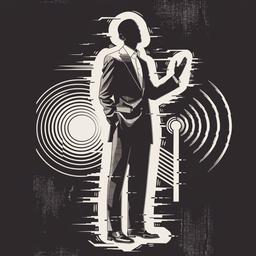
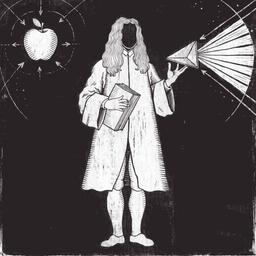

Mercury–Pluto
Picasso did not depict suffering — he dissected it until its anatomy was exposed. Guernica, painted in weeks during the summer of 1937 while news of the Basque town's obliteration was still raw, is not protest art in any ordinary sense.
For this pattern
- Film
- ChinatownRoman Polanski, 1974
- Practice
- True Crime Research
Others who share it
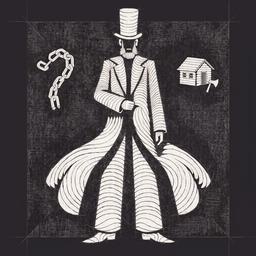
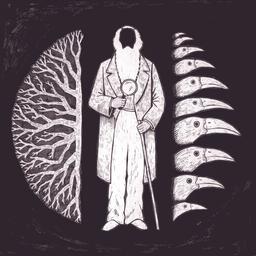
Jupiter–Pluto
Picasso did not grow by adding — he grew by destroying what he had already conquered and letting something fiercer emerge from the wreckage. By his mid-teens he could paint with the naturalistic prowess of an academician twice his age; by twenty-five he had detonated that mastery with Les Demoiselles d'Avignon, a canvas so raw that even Braque recoiled.
For this pattern
- Film
- The GodfatherFrancis Ford Coppola, 1972
- Practice
- Mountaineering
Others who share it
Questions about Pablo Picasso
When was Pablo Picasso born and what was his death date?
He was born on 25 October 1881 in Málaga, Spain. He died on 8 April 1973 in Mougins, France, at the age of 91.
What patterns stand out in Pablo Picasso's birth chart?
Psyborg reads three patterns in Picasso's chart: Mercury–Jupiter, Mercury–Pluto and Jupiter–Pluto. This page gives Psyborg's read of each, with a film and a practice for each pattern and the other archetypal mentors who share them.
How old was Picasso when he got into art school?
He was 13. He took the entrance exam for the advanced class at Barcelona's School of Fine Arts. It often took students a month, but he finished it in a week.
Who else shares Picasso's patterns?
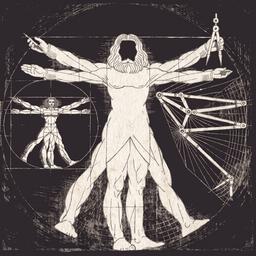
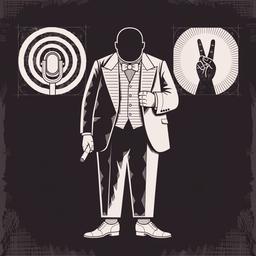
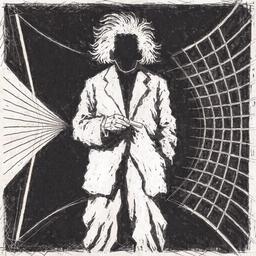
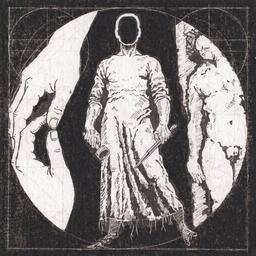
Mercury–Jupiter: Barack Obama, Isaac Newton and Hokusai. Mercury–Pluto: Abraham Lincoln, Charles Darwin and Leonardo da Vinci. Jupiter–Pluto: Albert Einstein, Michelangelo and Nelson Mandela.
More archetypal mentors

Which of Picasso's patterns live in you?
Psyborg reads your birth chart, shows you the archetypal mentors who share your patterns, and talks with you about what they mean for the work in front of you.
See where your chart meets Picasso's14 days free. No card needed.Already a member? Open Psyborg →The archetypal mentors featured here are historical and public figures presented for educational and inspirational purposes. Biographical profiles are editorial interpretations inspired by publicly documented lives, works, and words. Inclusion does not imply endorsement of or affiliation with Numinous Realm or Psyborg.
What's newPrivacyTermsDeveloped by Numinous Realm© 2026 Psyborg